



Genre: Thriller/Romance
Release Date: 2004
Language: Hindi ORG+English[DualAudioMovie]
“Wicker Park” (2004) is an American romantic thriller drama film directed by Paul McGuigan. The film stars Josh Hartnett, Rose Byrne, Diane Kruger, and Matthew Lillard and is a remake of the 1996 French film L’Appartement, which loosely draws inspiration from Shakespeare’s A Midsummer Night’s Dream. The movie was partially filmed in Montreal, and its title refers to the Wicker Park neighborhood in Chicago.
Plot Summary:
The story revolves around Matt Simon, a young advertising executive who returns to Chicago with his fiancée, Rebecca, after two years in New York. He encounters his old friend Luke and soon becomes obsessed with finding his former love, Lisa, who mysteriously disappeared two years ago. Matt embarks on a quest filled with twists and turns, leading him to a woman named Alex, who has been pretending to be Lisa. As the story unfolds through flashbacks, Matt unravels the truth about Lisa’s disappearance, culminating in a dramatic reunion.
Reception:
“Wicker Park” received mixed to negative reviews from critics. It holds a 27% approval rating on Rotten Tomatoes, with critics citing the film’s implausible coincidences and convoluted plot as major drawbacks. The film’s non-linear narrative and complex structure received both praise and criticism, with some finding it intriguing and others overly complicated. Despite the criticism, Roger Ebert praised the film for its emotional realism.
The film had a budget of $30 million but grossed only $21.6 million worldwide, making it a commercial disappointment. However, it was nominated for the Grand Prix at the Montreal World Film Festival, reflecting some recognition of its artistic effort.

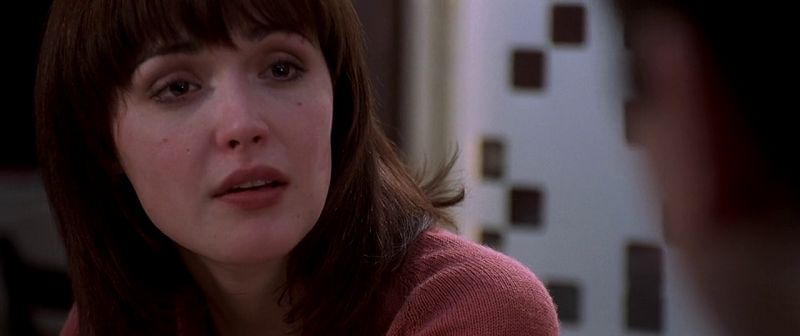
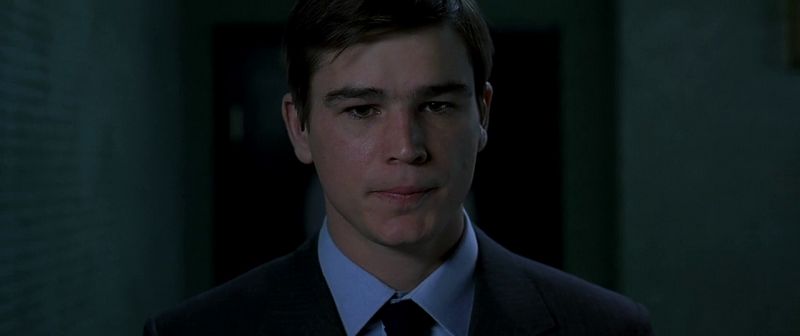


About Wicker Park Movie in Details
“Wicker Park” (2004) is an American romantic thriller drama film directed by Paul McGuigan. The film features a talented ensemble cast, including Josh Hartnett, Rose Byrne, Diane Kruger, and Matthew Lillard. It is a remake of the critically acclaimed 1996 French film L’Appartement, which itself takes loose inspiration from William Shakespeare’s A Midsummer Night’s Dream. This modern adaptation weaves a complex narrative of love, obsession, and mistaken identity, set against the backdrop of Chicago’s vibrant Wicker Park neighborhood.
Plot Summary
The film follows Matt Simon, a young and successful advertising executive, who returns to Chicago after spending two years in New York. He arrives in the city with his fiancée, Rebecca, and seems poised to embark on a promising future. However, a chance encounter with his old friend Luke at a restaurant sparks a journey that upends his life.
While at the restaurant, Matt overhears a conversation that he believes is coming from Lisa, a woman he was deeply in love with two years ago. Lisa vanished suddenly and inexplicably from his life, leaving Matt heartbroken and confused. Despite being on the cusp of a major business trip to China, Matt decides to abandon his plans and instead embarks on an obsessive quest to find Lisa.
Matt’s search takes him on a labyrinthine journey through the city, marked by a series of cryptic clues. A key card left at the restaurant leads him to a hotel where he discovers Lisa’s silver compact and a newspaper article that seems to hold significance. He leaves a note for Lisa at the hotel, hoping to reconnect with her.
His investigation deepens when he borrows Luke’s car and follows a man mentioned in the newspaper article to an apartment. Inside, Matt finds a note addressed to Lisa with a key enclosed. He leaves a message for Lisa, asking her to meet him in Wicker Park, and keeps the key, hoping it will lead him closer to her.
However, when Matt returns to the apartment the next day, he encounters a woman who also claims to be named Lisa. This “Lisa” possesses items identical to those Matt remembers from his former love, further confusing him. They spend the night together, but flashbacks reveal that this woman is actually Alex, Lisa’s old neighbor and friend. Alex has been harboring unrequited feelings for Matt and has gone to great lengths to sabotage his relationship with the real Lisa, including intercepting messages and manipulating situations to keep them apart.
As the story unfolds, Matt’s memories of his relationship with Lisa are revisited in flashbacks, showing the depth of their connection and the pain caused by her sudden disappearance. The truth slowly unravels as Matt begins to piece together the deception that has kept them apart for so long.
In a climactic series of events, Matt finally confronts Alex and uncovers her web of lies. Realizing that Lisa had tried to reach out to him two years ago, but Alex had intercepted her messages, Matt is devastated by the time they lost. However, armed with this new knowledge, he rushes to find Lisa before she leaves for London, hoping for a second chance at love.
Reception
“Wicker Park” received mixed to negative reviews from critics. On Rotten Tomatoes, the film holds a 27% approval rating based on 137 reviews, with an average rating of 4.4 out of 10. The consensus among critics was that the film’s plot relied too heavily on implausible coincidences and an overly convoluted structure, making it difficult to follow and believe. Similarly, on Metacritic, the film has a weighted average score of 40 out of 100, indicating “mixed or average reviews” based on 26 critics.
Many critics felt that the film’s complex narrative, which jumps back and forth in time and shifts between various characters’ perspectives, was both a strength and a weakness. While some appreciated the intricate storytelling, others found it confusing and unnecessarily complicated. The Associated Press criticized the characters for making “incredibly stupid” decisions that seemed contrived for the sake of advancing the plot. The Arizona Republic went further, calling the film “a movie with more unbelievable coincidences than a Henry Fielding novel,” and likened it to a Swiss cheese full of plot holes.
Director Paul McGuigan’s approach was also a point of contention. Some felt that he prioritized the youth and glamour of his cast over the substance of the script. The New York Times commented that McGuigan’s directorial touches couldn’t salvage a project as poorly conceived as this one. However, not all reviews were negative; Scott Foundas of Variety noted that despite its flaws, Wicker Park remained faithful to the original French film’s complex narrative structure. He praised the film’s ability to weave together disparate pieces of the plot into a coherent whole by the end.
Roger Ebert, in a more favorable review, remarked that the film worked because the actors brought an “astonishing emotional realism” to their performances, which helped ground the story despite its implausibilities. He acknowledged that while the movie’s twists might seem far-fetched, they were effective in maintaining suspense and engagement.
Box Office Performance
Despite its intriguing premise and strong cast, “Wicker Park” struggled at the box office. Filmed on a budget of $30 million, the film grossed only $21.6 million worldwide, falling short of recouping its production costs. The film’s commercial performance was disappointing, especially considering the talent involved and the potential appeal of its genre.
Nevertheless, the film did receive some recognition, as it was nominated for the Grand Prix des Amériques at the Montreal World Film Festival, a testament to its artistic ambitions despite its commercial shortcomings.
This detailed overview provides a comprehensive look at the film, covering its plot intricacies, critical reception, and box office performance.